Characteristics
- Appearance: The tree features a wide, spreading crown and can grow up to 25 meters (82 feet) tall in its native habitat. It has smooth, gray bark and dense, glossy, dark green oval leaves.
- Aerial roots: As it matures, the tree develops numerous rust-colored aerial roots that can descend and eventually develop into supportive prop roots or accessory trunks. This feature is often highlighted when grown as a bonsai.
- Fruit: Small, paired, yellow to reddish figs grow in the leaf axils.
- Habitat: It thrives in warm, humid climates and is tolerant of a variety of conditions, including urban pollutants. It can be found in rainforests, along river edges, and in coastal areas.
Care requirements
For those cultivating Ficus microcarpa as a houseplant or bonsai, here are the essential care instructions:
- Light: Prefers bright, indirect sunlight. Direct afternoon sun can scorch the leaves.
- Water: Water generously when the top layer of soil feels dry. Reduce watering in the winter. Avoid overwatering, which can cause root rot.
- Humidity: The plant enjoys high humidity. You can increase humidity by misting the leaves or placing the pot on a tray filled with pebbles and water.
- Temperature: It thrives in warm temperatures between 20°C and 35°C (68°F and 95°F) and should be protected from temperatures below 10°C (50°F).
- Soil: Use a well-draining, fertile, and loamy soil mix.
- Fertilizer: During the growing season (spring and summer), fertilize with a balanced liquid fertilizer every couple of weeks. Reduce feeding in the fall and winter.
Uses and benefits
- Ornamental: Widely cultivated as a shade tree in tropical climates and as an indoor container plant or bonsai specimen elsewhere.
- Bonsai: The species is a popular choice for bonsai due to its attractive glossy leaves and ease of shaping. The “Ginseng” variety, with its exposed root system, is a common favorite.
- Air purification: Like many fig plants, Ficus microcarpa can help remove harmful air pollutants, contributing to a cleaner indoor environment.
- Traditional medicine: Various parts of the plant, including the bark, aerial roots, and dried leaves, are used in traditional medicine in some cultures to treat a range of ailments.
Potential issues
- Leaf drop: Sudden changes in temperature, light, or watering can cause the plant to drop its leaves. Cold drafts are a common culprit.
- Pests: Indoor plants should be monitored for common pests such as spider mites, mealybugs, and scale.
- Toxicity: Like other Ficus species, the sap is mildly toxic and can cause skin irritation.
Only logged in customers who have purchased this product may leave a review.
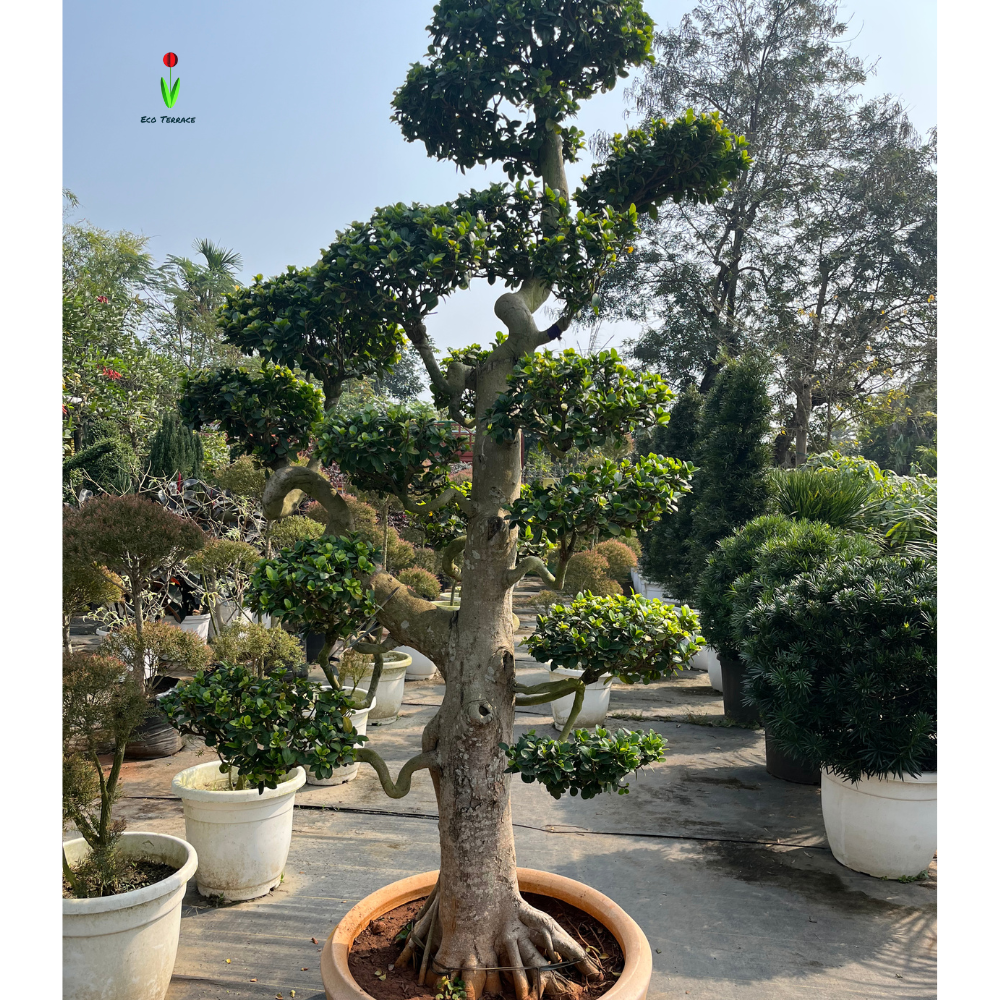

 Jizo Buddha
 Jizo Buddha
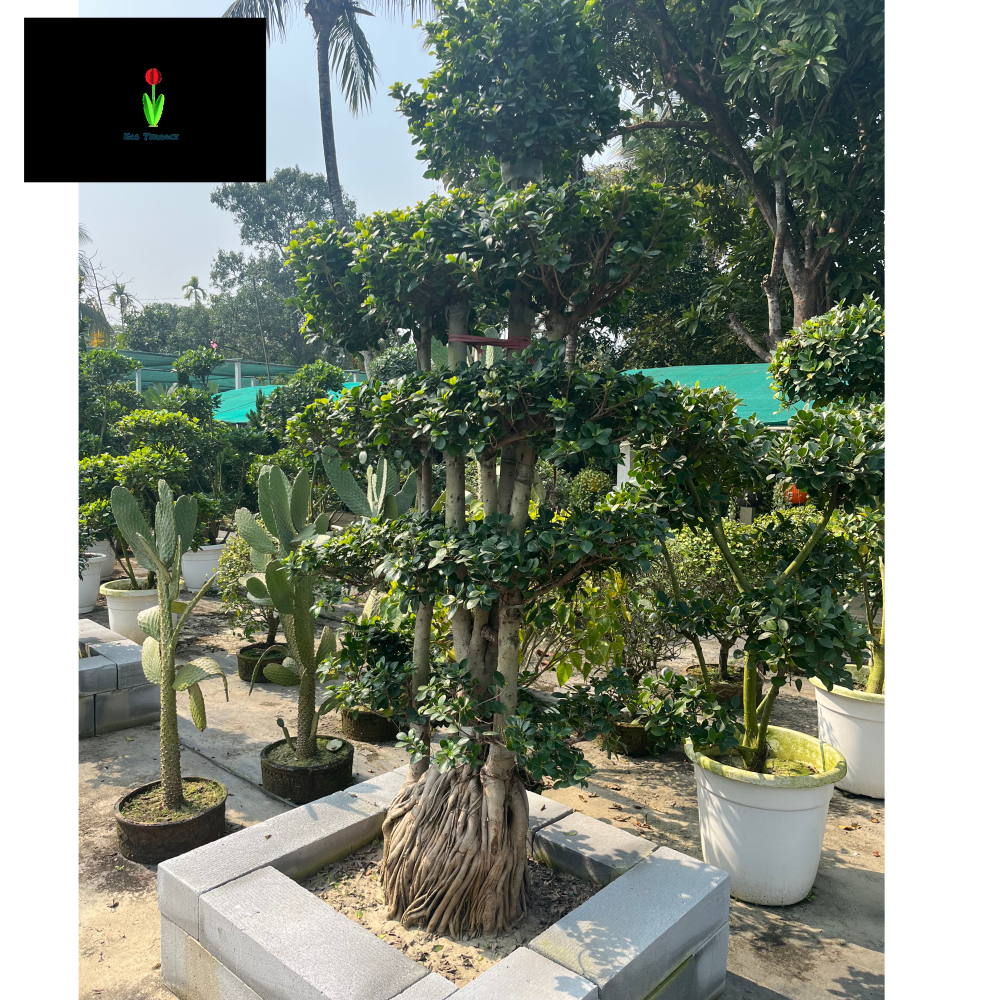 Ficus Microcarpa
 Ficus Microcarpa
Reviews
There are no reviews yet.