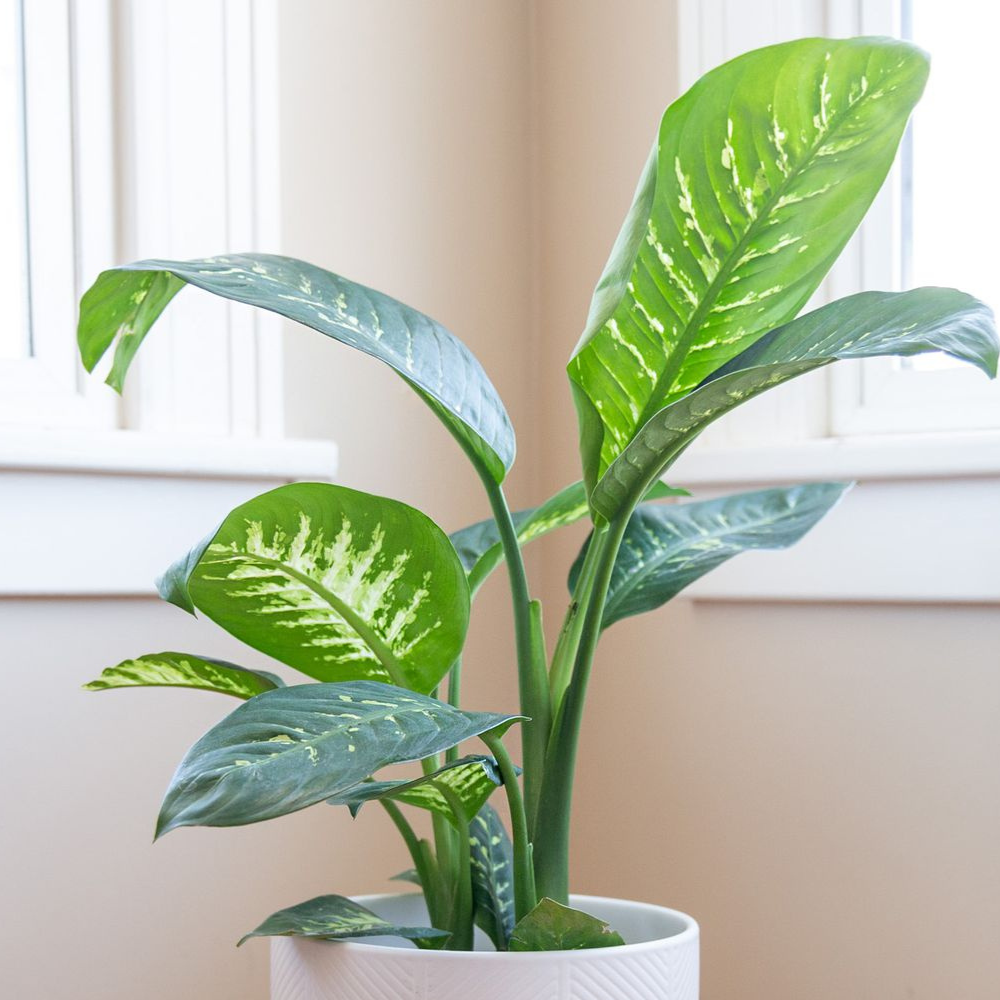
Dieffenbachia or Dumbcane is a popular tropical houseplant known for its large, lush foliage. Its striking variegated leaves, which can feature patterns of cream, white, and various shades of green, add an exotic touch to any indoor space.
Warning: toxicity
Dumbcanes are well-known for their toxicity. The sap contains calcium oxalate crystals, and if any part of the plant is chewed or ingested, it can cause severe irritation, burning, and swelling of the mouth, tongue, and throat. The swelling can be severe enough to cause temporary speechlessness, which is where the plant gets its common name.
Handling: Handle the plant with care, as the sap can also cause skin irritation upon contact.
Pets and children: It is crucial to keep this plant away from children and pets, as ingestion can be dangerous.
Care guide
Light: Dumbcanes thrive in bright, indirect light but can tolerate lower light conditions. Direct sunlight can scorch its leaves and cause the colors to fade. Rotate the plant regularly to ensure even growth.
Watering: Water thoroughly when the top 1–2 inches of soil feel dry to the touch. Do not let the plant sit in waterlogged soil, as this can cause root rot. Reduce watering during the winter months when the plant is less active.
Humidity: As a tropical plant, the Dumbcane prefers high humidity. You can increase humidity by misting the leaves, using a pebble tray filled with water, or placing it near other houseplants.
Temperature: Maintain a warm and consistent temperature between 65–75°F (18–24°C). Avoid placing it in cold drafts or near heating and cooling vents.
Soil: Use a well-draining, peat-rich potting mix that retains some moisture. A general-purpose indoor potting mix is often suitable.
Fertilizer: Feed with a balanced, liquid houseplant fertilizer every 4–6 weeks during the spring and summer growing season. Dilute the fertilizer to half-strength to avoid over-fertilizing.
Common problems
Yellowing leaves: Often caused by overwatering. Adjust your watering schedule to allow the soil to dry out more between waterings.
Brown leaf tips/edges: Can result from low humidity, inconsistent watering, or mineral buildup from tap water. Try using distilled or filtered water and increasing the humidity.
Dropping lower leaves: This can occur if the plant is exposed to cold drafts or very low temperatures. A Dumbcane that loses its lower leaves and develops a long, bare stem is considered “leggy” and can be a sign it needs more light.
Pests: Watch for common houseplant pests such as spider mites, mealybugs, and aphids. Wiping the leaves regularly can help prevent infestations.





Reviews
There are no reviews yet.