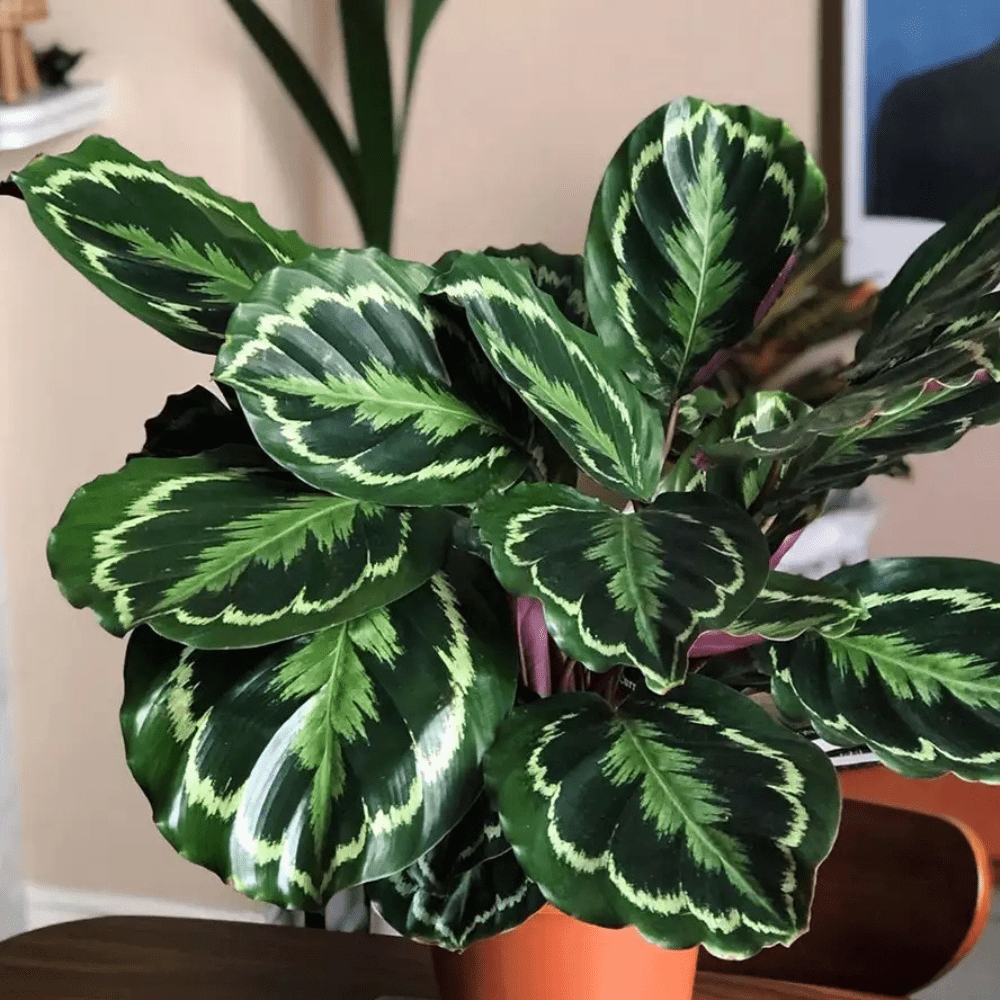
Tropical plants known for their wide, vividly patterned leaves and unique daily movements. Nicknamed “Prayer Plants,” their leaves fold up at night and unfurl in the morning in a process called nyctinasty. Native to rainforest floors, they thrive in warm, humid conditions with indirect light and are non-toxic to pets, making them a popular choice for homes.
Care guide
Light: Prefers bright, indirect light, mimicking its native rainforest floor. Direct sunlight can scorch its leaves and fade their vibrant patterns.
Watering: Keep the soil consistently moist but not soggy. Use distilled, filtered, or rainwater, as calatheas are sensitive to the chemicals and minerals in tap water. Allow the top inch of soil to dry out between waterings.
Humidity: Requires high humidity (50% or more). Increase humidity by misting daily, using a humidifier, or placing the pot on a pebble tray with water.
Temperature: Prefers warm, consistent temperatures between 65–85°F (18–30°C). Avoid temperatures below 60°F and protect the plant from cold drafts.
Soil: Use a well-draining, moisture-retentive potting mix. A blend containing ingredients like compost, coco coir, pine bark, and perlite is ideal.
Fertilizer: Feed with a balanced, diluted liquid fertilizer every 2–4 weeks during the active growing season (spring and summer).
Common problems
Curling leaves: A sign of low humidity or underwatering. Increase moisture levels and ensure consistent watering.
Brown leaf tips or edges: Often caused by dry air, inconsistent watering, or mineral buildup from tap water. Switch to distilled water or filtered water to resolve.
Yellowing leaves: Typically a sign of overwatering. Adjust watering schedule and check the roots for rot.
Faded leaves: Can result from too much direct sunlight. Move the plant to a shadier location.
Pests: Susceptible to pests like spider mites and mealybugs. Wipe leaves regularly and treat with neem oil if necessary.



Reviews
There are no reviews yet.